Pickle, ferment, brine and jam out to these recipes as we celebrate the magic of preserving.
Fermentation 101
Fermentation is a chemical process involving food that is placed in an environment without oxygen. When using salt brine for fermentation, the good bacteria (called lactic acid) is promoted while the bad bacteria is killed. This type of vegetable fermentation using salt brine is called lacto-fermentation, where the lactic acid feeds on the carbohydrates in the food, producing acid. The overall conversion process results in the food having more flavour and that classic tangy taste.
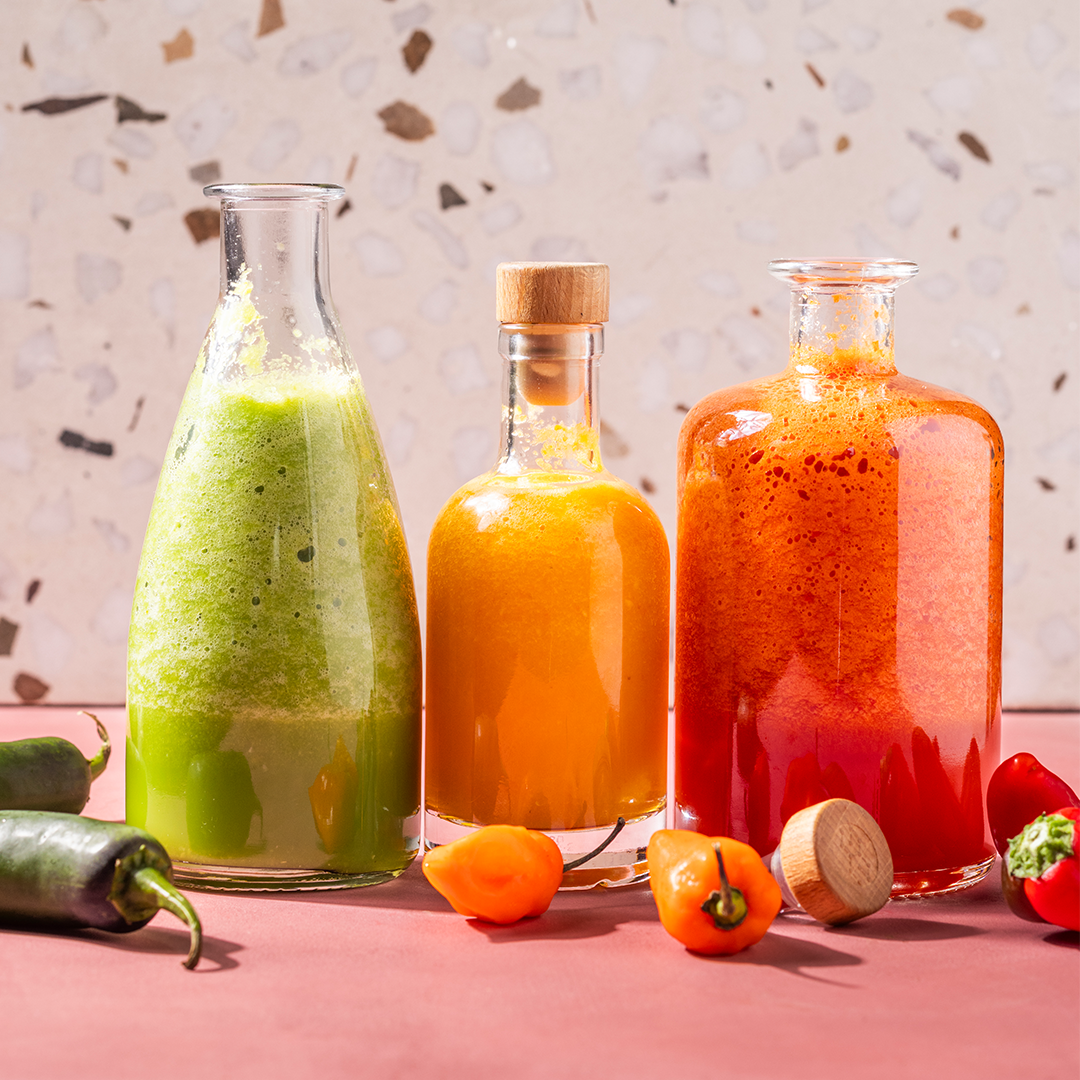
Red light hot sauce
Instead of Pepperitos, use a second red pepper or 3 red Palermo peppers.
Makes about 1½ cups
Ingredients
6 (about 80g) red
Pepperito peppers, halved
1 red pepper, deseeded and chopped
2 cloves garlic, sliced
½ onion, sliced
After fermentation
3 Tbsp honey
Orange light hot sauce
Fiery and intense, this is for the true hot sauce lovers!
Makes about 1 cup
Ingredients
9 (about 65g) orange
Habanero chillies, stems removed, halved
1 yellow pepper, diced
1 clove garlic, sliced
20g ginger, peeled and sliced
After fermentation
2 Tbsp red wine vinegar
Green light hot sauce
A kick of heat with a freshness from the lime and mint.
Makes about 1 cup
Ingredients
5 (about 115g) green jalapenos, sliced
½ green pepper, chopped
1 lime, quartered
After fermentation
20g mint leaves
2 Tbsp white spirit vinegar
Natural salt, such as sea or Himalayan salt
Filtered water
Method
- Prep the ingredients for your sauce of choice (or all three, if you like), adding each group to their own bowl.
- Place an empty jar on a scale and press tare to bring the weight to zero.
- Add your vegetables (leaving about 1-2cm space at the top), leaving the recorded weight on.
- Add clean, filtered water to cover the vegetables completely (also leaving 1-2cm space), noting the total weight. For example, 450g.
- Multiply this weight by 2.5%, or 0.025 to get the grams of salt needed. 450g x 0.025 = 11.25g of salt needs to be added to water to make brine.
- Holding the vegetables in place with your hand, tip the jar over to pour the water back out into a second jar or bowl.
- Add the specified weight of salt to the water, stir to completely dissolve, then pour this brine back into the jar with the vegetables.
- Use a weight (such as a small jar or resealable bag filled with water) to make sure all of your vegetables are covered by the brine. (Keeping the veg under water avoids contact with the air, preventing mould).
- Secure the lid of the jar, leaving it open slightly to allow gasses to escape during fermenting. Set the jar on a plate in case any excess liquid overflows during this process, then place in a cool, dry place.
- Leave to ferment for 5-14 days. The brine should begin to turn cloudy. The longer you leave it, the sharper the taste.
- Once you’re happy with the fermentation time, open the jar, remove the weight and strain the liquid from the veggies, reserving it for later.
- Add strained vegetables from one jar into a blender along with½ cup of the brine and any of the added flavourings (see ingredients ‘after fermentation’ stage). Blend until smooth, adding more brine to loosen the mixture if needed.
- Decant into jars or bottles and refrigerate for up to 6 months.
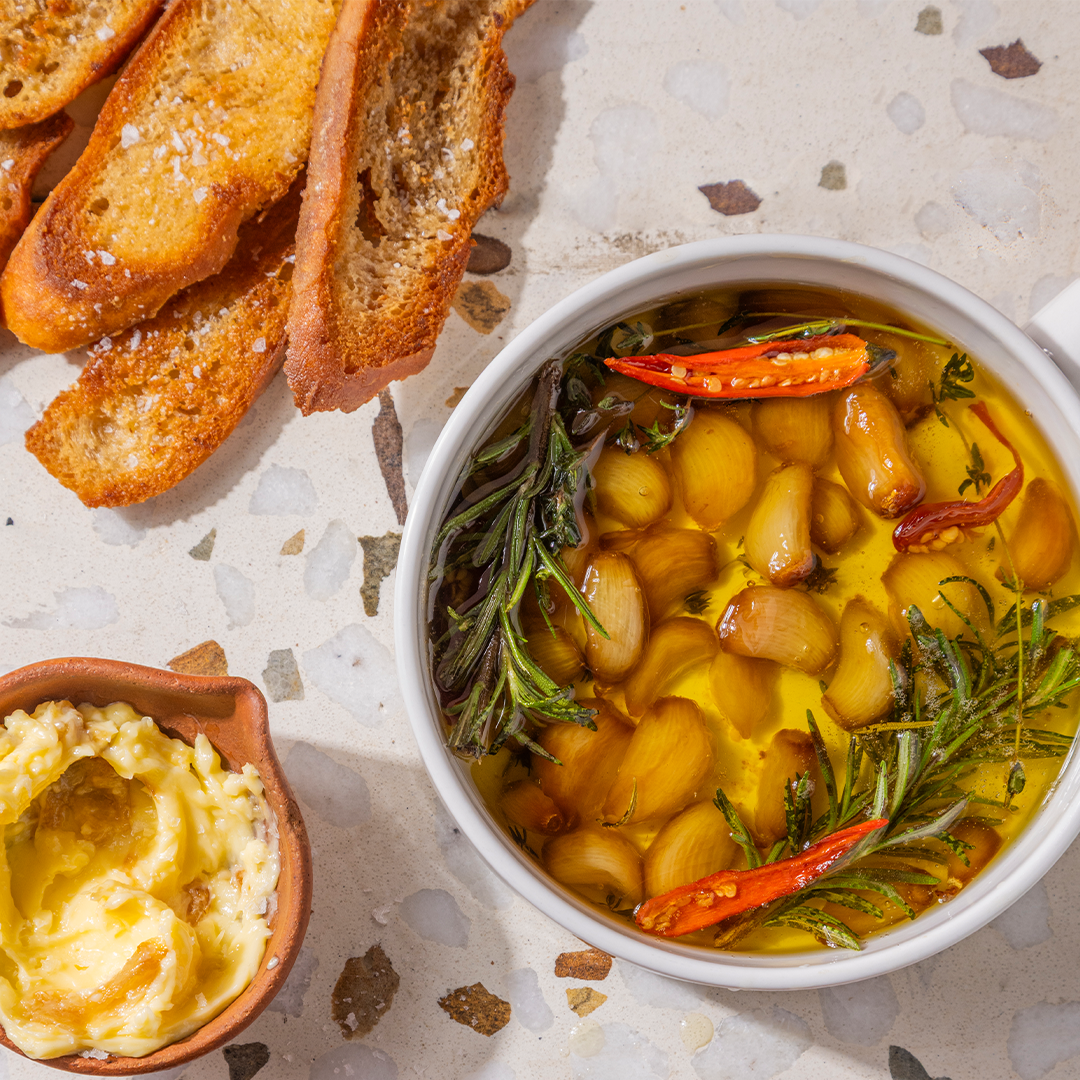
Garlic Confit
From the French word confire meaning “to prepare”— to confit means to slowly cook food submerged in fat over a long period of time at a low temperature. The fat protects the food from oxygen, extending its shelf life.
Makes about 2 cups
Ingredients
2 bulbs garlic, cloves separated and peeled
3 sprigs rosemary
2 sprigs thyme
1 tsp flaky salt
1 red chilli, halved (optional)
1 ½ cups olive oil blend
Method
1. Place the garlic cloves in a pot over the stove.
2. Add the herbs, salt, and chilli, then pour in the oil.
3. Gently simmer over low heat for 30–40 minutes, or until the garlic turns a deep golden colour. To test if ready, smear a clove with a knife – if tender throughout, remove from the heat.
4. Cool for 30 minutes. Transfer the garlic, herbs, and spices, followed by the oil, into a sealable glass jar. Tap the jar lightly to release any air pockets.
Cook’s Tip
Store confit garlic in its oil in the refrigerator. Use the flavoured oil in cooking, add cloves to stews or roasts, or spread onto bread. Mash a few cloves into half a block of soft butter with chopped herbs to make luscious garlic butter.
Crunch time
As seen with our fermented hot sauces, pickling follows the same method of creating an oxygen-free environment where good bacteria can thrive, but this time, with the essential addition of vinegar to boost the process. Quick pickling is faster than fermentation but creates delightfully tangy, crunchy snacks.
Quick pickling liquid
This recipe is for those new to pickling, creating less of a tangy taste compared to other ratios like the 3:2:1 method (3 parts vinegar, 2 parts water, 1 part sugar). In future you can adjust the ratio to your liking by testing quantities.
Makes 3 cups
Ingredients
Vegetable of choice
1 ½ cups
5% acidity white spirit vinegar
1 ½ cups water
2 tsp salt
½ cup sugar
Method
- Prep your vegetable and add to a sealable jar big enough to submerge the produce.
- Add pickling ingredients and flavour add-ins like spices to a pot over high heat and bring to a boil for 1 minute.
- Remove from the heat and carefully pour into your jar, covering the vegetables completely.
- Seal jar and set aside until room temperature before moving to the fridge for up to a week.
Crunch time
As seen with our fermented hot sauces, pickling follows the same method of creating an oxygen-free environment where good bacteria can thrive, but this time, with the essential addition of vinegar to boost the process. Quick pickling is faster than fermentation but creates delightfully tangy, crunchy snacks.
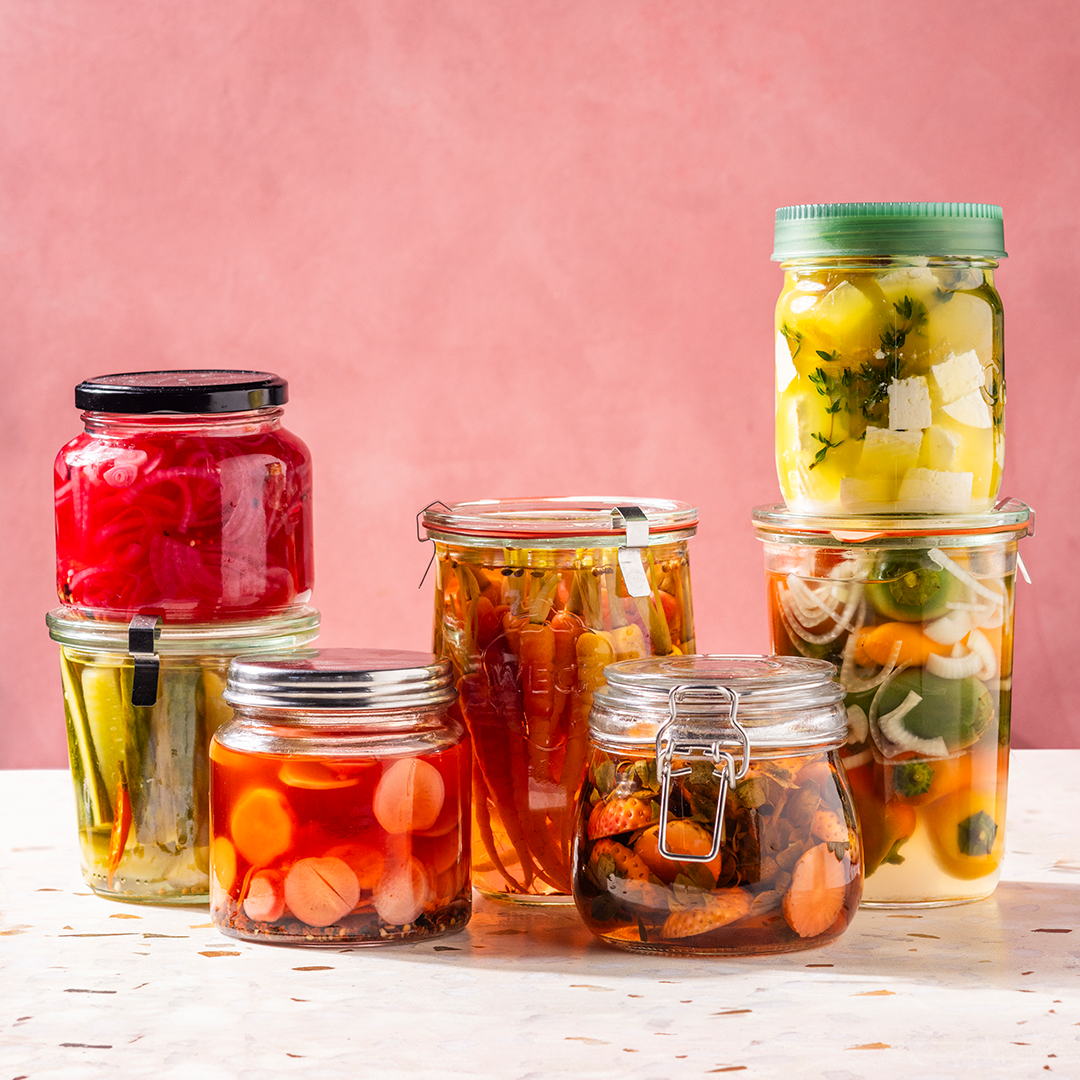
Red onion
Thinly slice 2 red onions and add to a jar. For the pickling liquid, substitute ½ cup white vinegar for ½ cup red wine vinegar. Add the sugar, 1 tsp black peppercorns and 1 tsp yellow mustard seeds. Bring mixture to a boil and stir to dissolve the sugar completely. Remove, pour over onions and seal.
Cucumber
Slice 1 large cucumber into batons (thick matchsticks) and add to a jar. Add 4cm and thinly sliced ginger. 1 tsp yellow mustard seeds and 1 halved red chilli. Combine quick pickling ingredients, bring to a boil then pour over cucumbers and seal.
Snacking peppers
Add 300g snacking peppers to a jar along with 3 garlic cloves and 1 sliced brown onion. Add the pickling ingredients to a pot along with 2 Tbsp apple cider vinegar and bring to a boil. Pour simmering liquid over contents of the jar and seal.
Rainbow carrots
Add 2 punnets (200g each) rainbow carrots, unpeeled, to a jar. For the pickling liquid, substitute 1/2 cup white vinegar for 1/2 cup rice vinegar. Add vinegar along with 1 tsp coriander seeds and 1/2 tsp cumin seeds to a pot and bring to a boil. Pour simmering liquid over carrots and seal.
Radish
Thinly slice 150g of radishes and add to a jar. Add quick pickling liquid along with 2 tsp black peppercorns and 1 tsp chilli flakes to a pot and bring to a boil. Pour simmering liquid over radishes and seal.
Marinated feta
Cube 1 punnet (400g) feta and add to a jar. Place 1 cup of olive oil in a pan and heat until hot, then add 3 halved garlic cloves, the zest from 1 lemon and 2 sprigs of thyme. Remove from the heat and cool for 20 minutes. Pour into the jar of feta and seal to infuse.
Strawberry top vinegar
Slice the tops from 2 punnets (250g each) strawberries, leaving a little fruity flesh attached to the green tops. Use strawberries as needed. Place tops in a jar and stir 2 tsp sugar through 2 cups of white wine vinegar, then pour into the jar.
Making jam
Jamming or making marmalades is a method of preservation used for thousands of years. The process, if using high quantities of sugar, creates an environment devoid of oxygen, submerging the fruit (or contents) of the product in a sweet home. Paired with proper sterilised jars or canning, the food is protected from bacteria and spoilage.
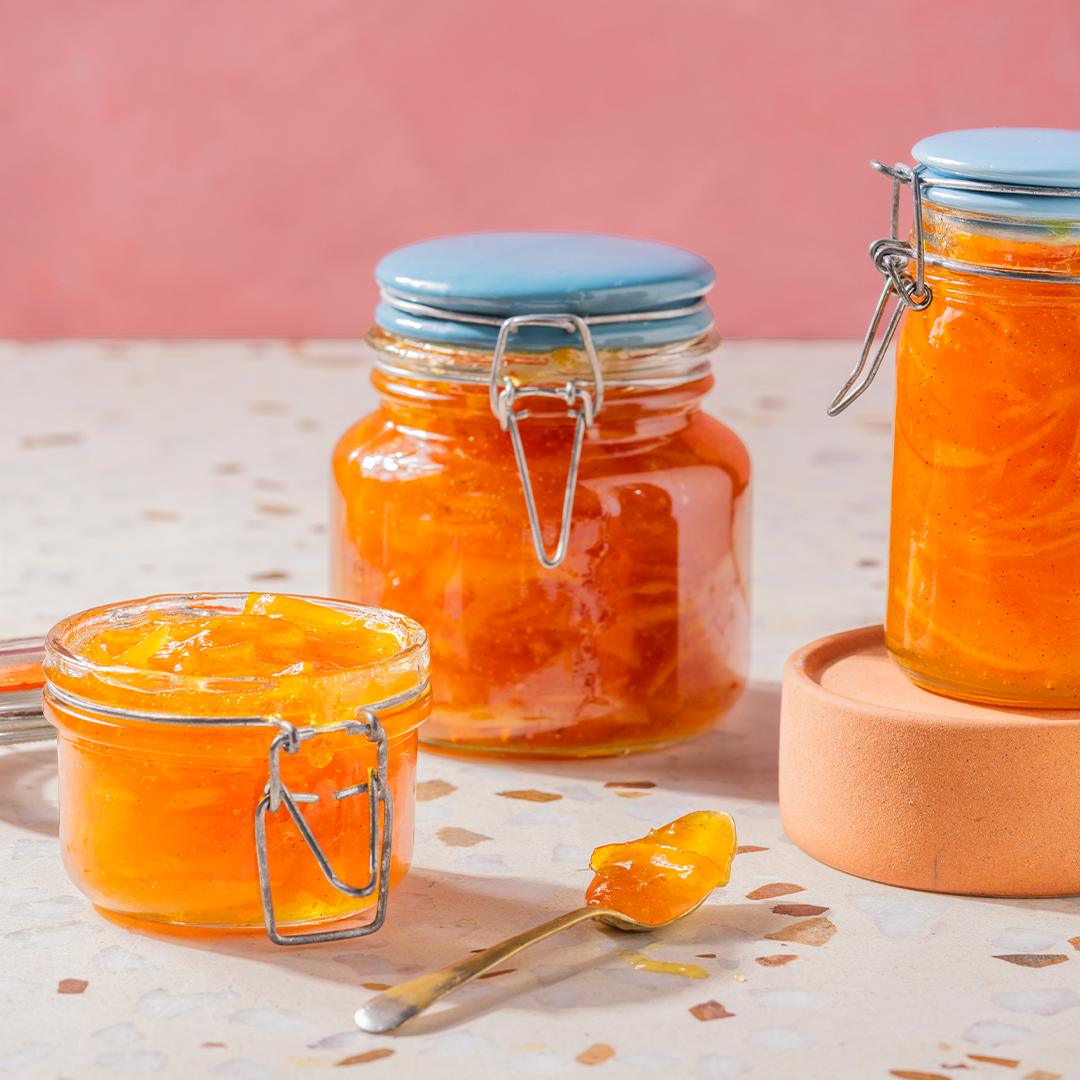
Citrus & vanilla bean
In the interest of time, start this recipe the day before. Unopened, the marmalade can last for up to a year or more. Once opened, keep refrigerated and consume within 2-3 months.
Makes about 3 (375ml) bottles
Ingredients
4 oranges
2 grapefruit
1 lemon
1 vanilla pod, halved
1L water
5 cups white sugar
Method
- Use a knife or vegetable peeler to remove the colourful zest from the oranges and grapefruit, trying to remove as little of the white pith as possible. (If some pieces contain a bit of white pith, then don’t worry too much, as we will be soaking it overnight to soften).
- Slice pieces of zest into thin strips and place in a large pot.
- Cut the remaining white pith off the zested citrus and place in a bowl, reserve about half of this for cooking.
- Using your hands, squeeze as much juice from the fruit pulp into the pot with the zest, if some of the pulp falls into the pot that’s okay, but make sure to keep the fibrous membranes out.
- Coarsely chop the lemon, remove seeds and add these to the bowl of pith.
- Add lemon chunks to the pot, scrape and add seeds form vanilla bean, as well as the bean casing.
- Add water and bring to a boil. Once bubbling, immediately turn off and cover. Leave overnight to soften.
- The next day, remove lemon chunks and vanilla casing.
- Add sugar and stir through.
- Heat mixture, stirring, to completely dissolve the sugar.
- Add a handful of the white pith, all of the soaked lemon and seeds to a square of double lined muslin cloth or a thin kitchen towel.
- Tie up ends and secure closed with string.
- Pop bag into the pot and bring mixture to a boil. Add two small plates to the freezer.
- Boil marmalade for about 40 minutes until reduced and thick, (a sugar thermometer should read 104°C for a minimum of 5 minutes.
- If you don’t own a sugar thermometer, add a small spoonful of marmalade (zest and syrup) to your cold plate, place in the freezer and wait for 3 minutes. If the mixture is jelly-like and wrinkly when pushed, then it is ready. If not, boil for another 5 minutes before trying again.
- Spoon marmalade into sterilised jars, seal and cool completely.
Recipes & styling: Liezl Vermeulen
Photography by: Austin Taylor, Supplied
Also read: Kota with spicy pickles