
Christi Nortier sat down with Abena Danquah, owner of Ghana Jollof, to find out how she transformed herself from the girl who never wanted to cook to a young woman who’s got a special touch when it comes to the food business – and Ghanaian jollof, of course!
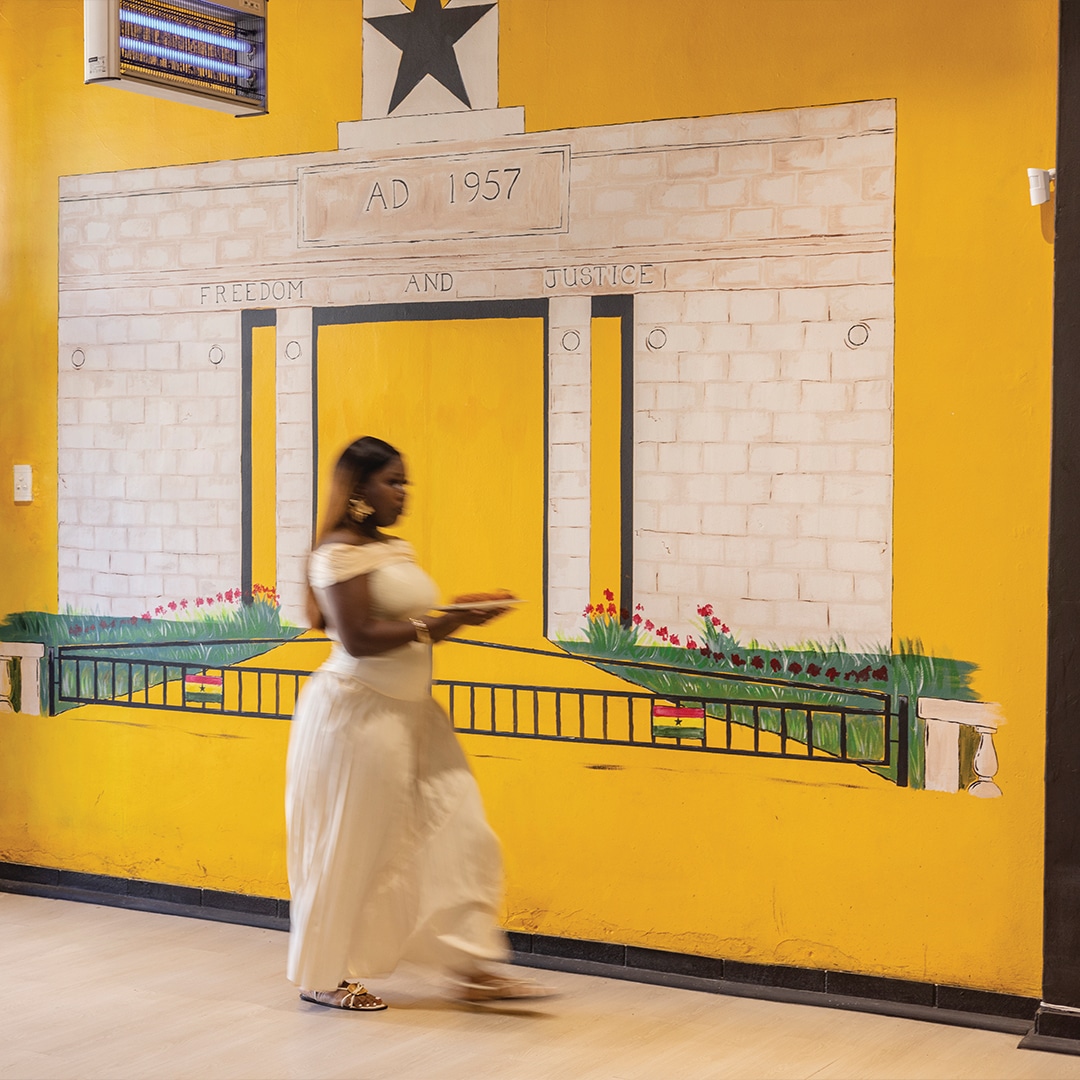
Stepping off wild Sir Lowry Road in Cape Town’s Woodstock and into Ghana Jollof is like stepping right onto to a West African beach. The scent of salty fish, a concoction of spices and simmering stews wafts over mellow music. Various mantras painted on the wall encourage you to “season everything with love”, “cook it easy” and “every bite takes you home”. Things are heating up in the kitchen, with chillies sizzling from early on in the morning. Customers take their time to enjoy plates heaped with an assortment of dishes of their choosing.
A beaming two-year-old greets every customer, whose bubbly babbling charms even the most manly of men waiting to order. This little guy is the son of Abena, the founder of Ghana Jollof. At just 34 years old, Abena has emigrated, pivoted and started a much-loved market stall and restaurant that brings the flavours, ingredients as well as dishes of Ghana to a West African diaspora and her loyal local converts. Her next stop? The world.
Despite having food businesses run in the family, Abena never thought she’d end up in the kitchen like the entrepreneurial women who came before her. “When I was young, I was lazy. I would find any excuse not to cook,” she says with an embarrassed chuckle. “Even when it was just me and my father at home, he had to beg me to cook. But my grandmother had a restaurant, and my mom has a catering business, so maybe it’s in my blood? I learnt to cook just by being around my mom and helping in her business. No one ever actually taught me. But here I am,” she beams, motioning to her bustling restaurant.
Born and bred in Accra, Abena had to swap one bustling city for another when she was 24 years old. After her father’s passing, she moved to Johannesburg. “In our culture, you need to have a male guardian close by, so I came to live with my older brother,” she explains. She contemplated film school, but her entrepreneurial streak got the better of her. However, her developing import/export business was shuttered during the first Covid lockdown.
“I spent my time cooking traditional Ghanaian dishes during lockdown and sent it to friends. They loved it, and one good friend made me promise to start selling the food if another lockdown came. One thing about me is I always stick to my word, so when we went back into lockdown, I started advertising my food on social media,” she smiles. “I couldn’t keep up. And that’s how Ghana Jollof started.”
After a few years in the city of gold, she felt a change brewing. She moved the business to Cape Town and applied to open a stall at the Neighbourgoods market at the hip and happening Old Biscuit Mill in Woodstock. “They gave me one market day to prove it would be a success. And we sold out,” she grins. “We’ve been there four years now and people still queue every weekend.”
It’s been only a year since she opened the Ghana Jollof restaurant in Woodstock, and she already has a steady stream of loyal customers coming into the store and ordering through delivery services. “We wanted our customers to have a place where they could spend time together and enjoy our food,” she reflects. “We would love to be open past 7pm, but it’s not the safest area to be out at night – for clients or for our staff. But we love it here.”
She gets all kinds of people, from all walks of life, coming through her restaurant’s door. “Ghanaians don’t need a visa to visit South Africa, so we have a lot of people from home coming to eat here. We still have many Nigerian clients (almost all our Joburg clients were Nigerian) and they love our jollof, by the way,” she says with a wink, referring to the mostly friendly “jollof wars” that debate which West African nation makes the best version of this dish.
“Many Cape Townians also come down from the office and apartment blocks, but the locals love to order our food on Uber Eats,” she adds. “We have a 4.6-star rating and over 2 000 repeat customers on there, plus over 1 000 reviews. That’s not easy to get!”
When asked what she would say to people who overlook African ingredients and dishes, she has a simple take on the matter. “I blame us,” she states. “For too long, we as Africans haven’t been doing enough to show the world why they should want to eat our food. We need to present it with pride, in places where its actually comfortable to sit and fun to be. We shouldn’t be okay serving it in an unthinking way, just because it’s African food. Once we do the work of levelling up, then everyone will see how absolutely delicious our food is.”
Abena is adamant that dining at Ghana Jollof should be just your first taste of the country – everyone needs to visit, she enthuses. “I haven’t been back to Ghana since lockdown, which is sad. However, my mom visits us often — which is amazing. I would encourage everyone to visit Ghana at least once in their lives. The history, the culture, the beaches, the food… you’ll come back fat,” she chuckles.
Customers might be begging her to bring Ghana Jollof back to Joburg, but her vision extends way beyond the capital. “My vision is to have a Ghana Jollof in every city in South Africa, as well as in Dubai and in Paris,” she says, with clear determination in her eyes. “I’d like to open another restaurant on the seafront where people can really get to know Ghanaian culture. I want them to experience how we grill fish over the fire, dance to high-life music and have fun. There’s nothing like it! I’m only 34 – there’s so much I still want to do…”
Jolly about jollof
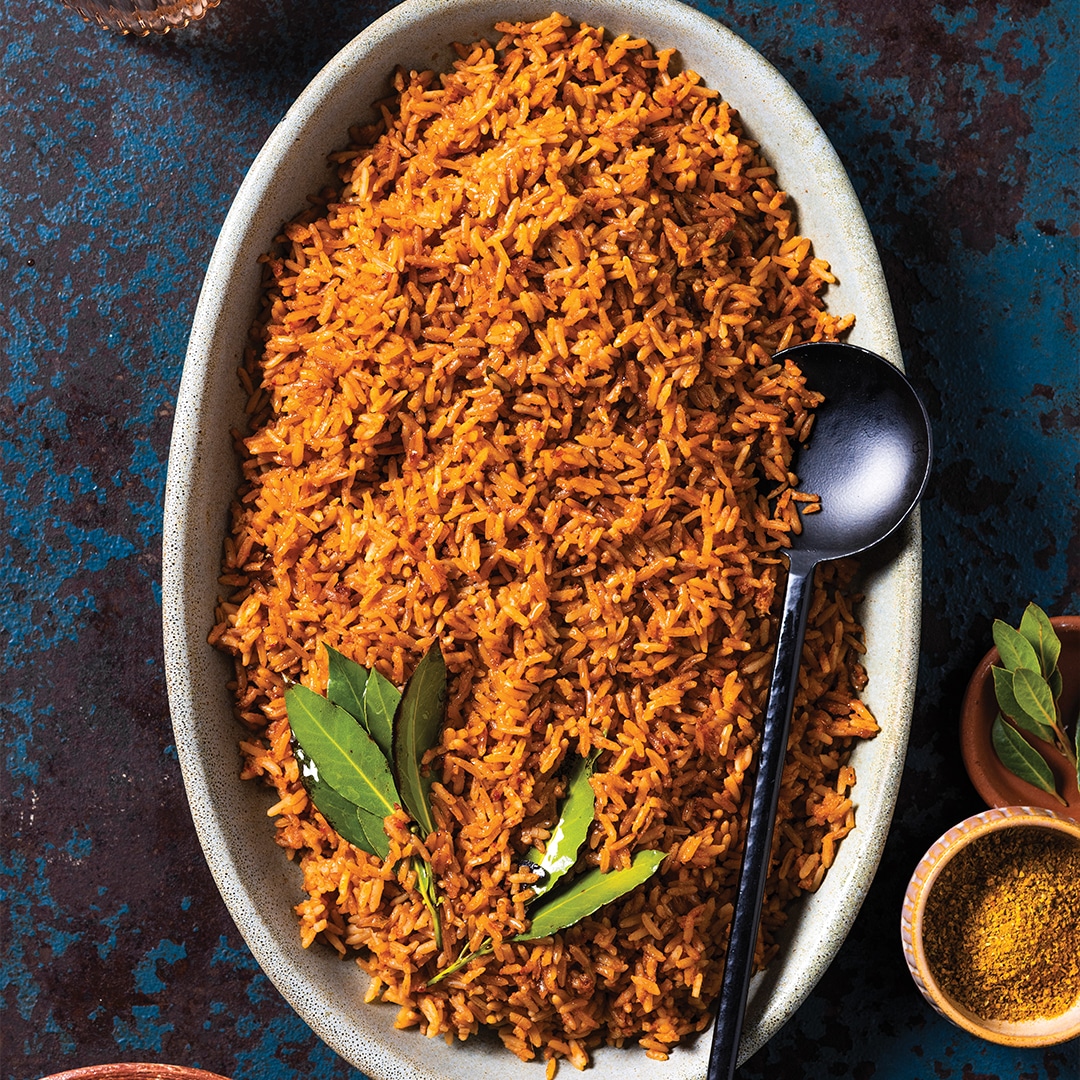
Who better to teach us about mastering jollof than Abena? She prides herself on the quality of her jollof, saying that the greatest compliment is that West African customers love her version. So, she’s the real winner of the “jollof wars”, then? Well, at least in our hearts – and bellies!
What is jollof?
This iconic West African dish is made slightly differently depending on your locale. Rice is slow cooked in a fragrant blend of tomatoes, garlic, ginger and spices in a pot on the stove.
“To us, it is more than just a dish. It unifies us and embodies our heritage and social pride. Nigeria, Ghana and Senegal compete for who makes the best jollof. The rivalry is not based on hate – it’s about banter, which actually brings us closer,” explains Abena. “Jollof is the main dish at parties in West Africa and in the diaspora. That’s how important it is to us.”
A word on rice
Ghanaian jollof is made with long grain rice, ideally basmati or jasmine, whereas Nigerian jollof is made with short grain rice by contrast. To find a middle ground, Abena uses a medium-length rice and it’s only been met by “mmm, more please” so far.
Spice it up
Ghanaian jollof has a specific blend of spices, which Abena jokes makes it the best. She’s generously shared her ingredient list and method with us:
Ingredients
¼ cup vegetable oil
1 large onion, blended
3-4 cloves garlic, blended
4-5cm ginger, blended
2-3 Tbsp tomato paste
3-4 ripe tomatoes, blended
1-2 red peppers, blended
2-4 Scotch bonnet peppers (optional, for heat)
1 top thyme
1 top curry powder
2-3 bay leaves
Salt and milled pepper
2 cups long-grain parboiled rice/basmati rice/Thai jasmine rice
2 cups chicken or vegetable stock
Protein (such as chicken, beef or fish) and vegetables (such as carrots or peas), to serve
Abena’s method
- Heat oil in a pot and saute blended onion, garlic, ginger, then mix until golden brown.
- Add tomato paste, stirring for 3-5 minutes.
- Pour in the blended tomatoes, tomato paste, peppers and Scotch bonnet. Cook until the mixture thickens, and the oil rises to the top.
- Add thyme, curry powder and bay leaves. Season and stir well.
- Wash the rice thoroughly and add it to the pot. Stir to coat the rice in the sauce.
- Pour in the stock, ensuring the liquid is just enough to cover your rice. Add more liquid of needed.
- Cover the pot and cook on low heat for about 45 minutes. Avoid stirring to prevent mushiness.
- Once the liquid is absorbed and the rice is almost cooked, reduce the heat to the lowest setting. Cover with foil or a tight lid to trap steam and let it cook for 10-15 minutes. This creates the signature smoky flavour.
- Gently fluff the rice with a fork. Serve hot with your choice of protein or veggies.
Abena’s note: For an authentic smoky flavour, let the rice “burn” slightly and become crisp on the bottom. This is optional, but traditional.
By: Christi Nortier
Photography by: Zhann Solomons
Text courtesy of MyKitchen magazine
Also read: Culinary delights from all over Africa