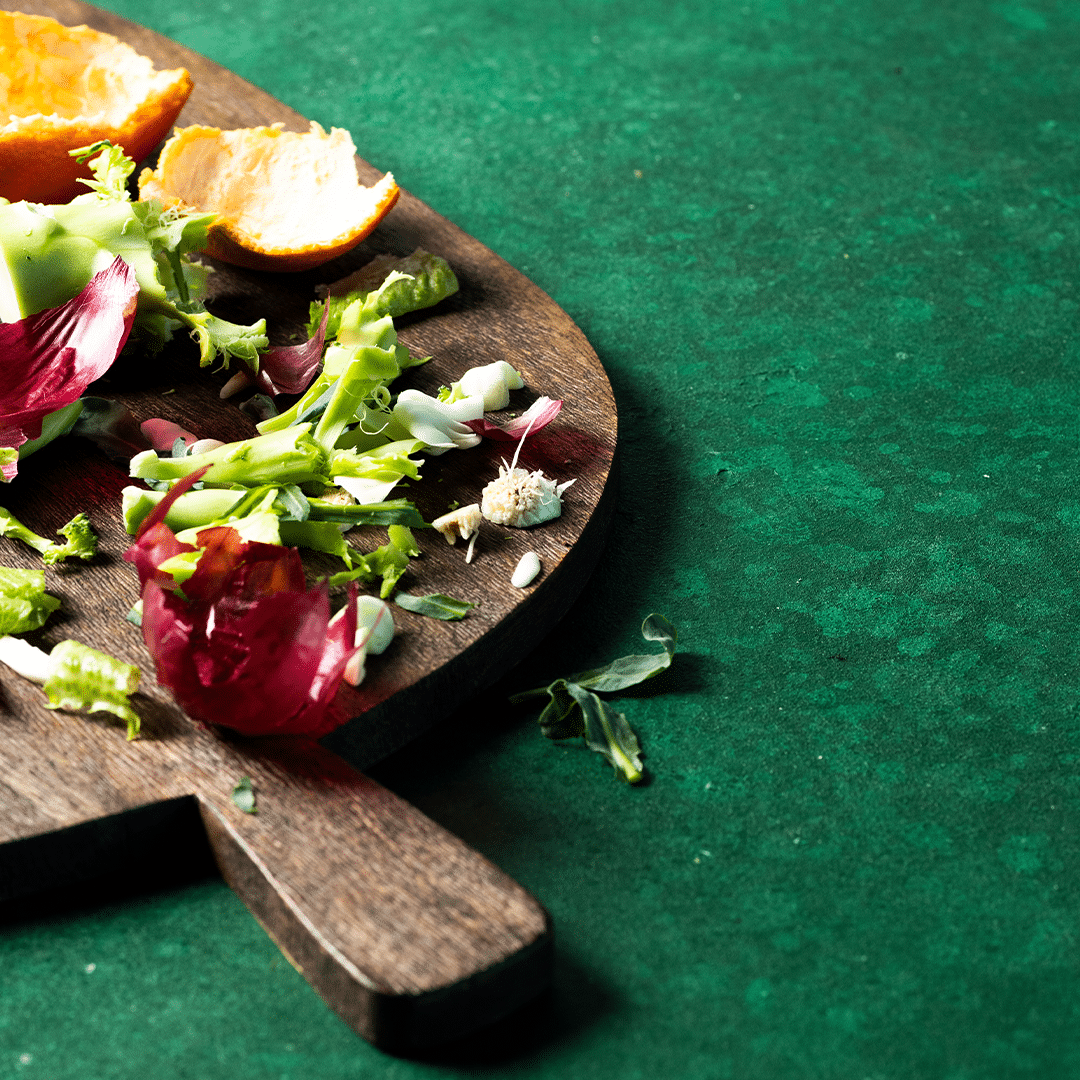
Composting is when you manage the natural breakdown of organic materials — aka your food scraps that go in the bin – in order to break it down into the soil. Compost replenishes the soil with nutrients, ensuring new plants get food to grow, which in turn will remove CO2 from the atmosphere. Everybody wins!
What happens if we don’t compost?
When your food scraps go to the bin, they likely end up in a landfill under rubbish and without air. When food decomposes without oxygen, it releases a gas called methane, a greenhouse gas (the stuff that’s making our planet hotter) that is about 28-34 times more potent than CO2, according to Yale Sustainability.
How to compost
1 A good ol’ compost heap
Preferably positioned on the outskirts of your garden, a heap of green waste and brown waste is placed on soil. Green waste includes fruit and veg scraps, eggshells, leaves and grass, while brown waste includes sawdust, twigs, brown leaves, certain paper and cardboard. Toss the waste and soil regularly to encourage decomposition.
2 Let earthworms do the work
Vermicomposting places earthworms and food scraps in a covered, layered container. The earthworm casting will be used as compost, while liquid tapped out can be used as fertiliser.
3 Bokashi
Food scraps are layered into a bucket and sprinkled with Bokashi bran. It is then sealed and left to ferment for 2-4 weeks. Unlike the other two methods, this uses fermentation to break down food. While it costs more (you’ll need to buy bran and probiotics in addition to the bin itself), it doesn’t need oxygen to break down food, which means you can compost indoors!
What to compost
- Do compost: fruit and veg scraps, bread, pips, seeds, coffee grounds, loose leaf tea, bread, paper towel.
- Don’t compost: processed or fried food, pet waste, lint, rubber, glass, plastic. (For backyard composting, we recommend not using any meat, bones or dairy products, as these take long to decompose and may lure in some unwanted smells and creatures.)
Green idea
Don’t have a garden? Freeze food scraps until you have enough to drop off at a composting plant. Once defrosted, the food will start to decompose.
You don’t need a garden to compost
You may think you don’t have the space to compost — it’s an easy out when you don’t have your own garden. But unfortunately (or fortunately!) you’re not off the hook!
Take a small step towards composting by delivering food scraps to a community garden. Most towns, big or small, have gardening initiatives that accept drop-offs. This supports green economic growth, which basically means activities that improve human lives while being good for the planet too!
Words: Liezl Vermeulen
Photography: Austin Taylor, Supplied
Also read: Useful hacks to repurpose old coffee beans