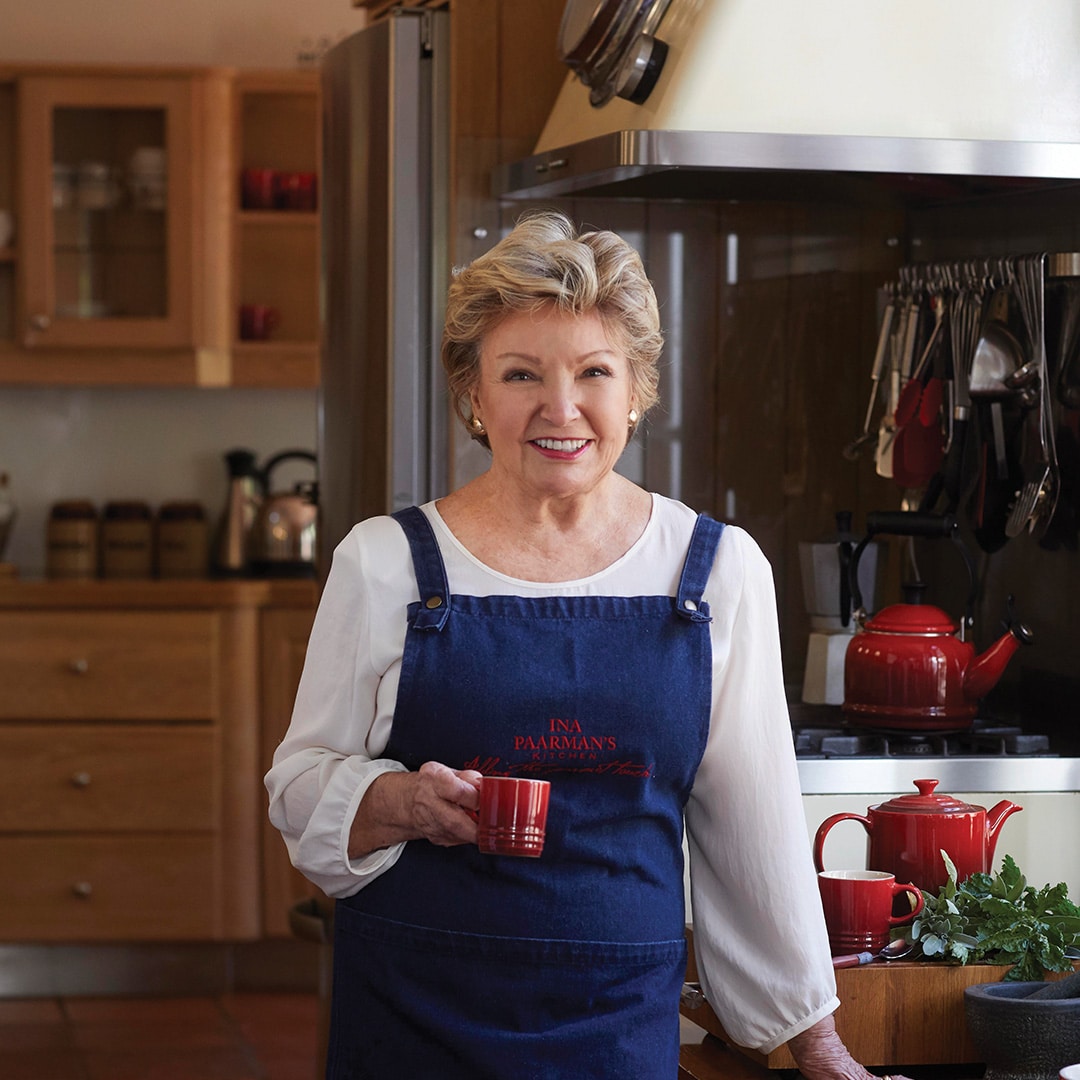
After 40 years in the business, Ina Paarman’s days are still filled with the best bits of what’s she’s spent decades building. Christi Nortier asked the icon about her workdays, festive menu and her favourite seasoning.
After her Christmas break, Ina Paarman is going back to the classroom. She’s picking up where she left off in the ’80s, when she taught home economics students, and then adults, how to cook flavourful, nutritious meals at home. In 2026, class will not be in Mrs Paarman’s garage as it was back then but in the brand-new demonstration kitchen at the Ina Paarman’s Kitchen factory.
But has Mrs Paarman ever really stopped teaching? She creates her products to show South Africans how to whip up meals at home that don’t compromise on quality, flavour and nutrition, she says. If that is her legacy, then she’s satisfied. But she’s not quite done sharing her knowledge just yet. While creating and testing new products, she continues to create instructional videos and brand-new recipes for the Ina Paarman’s Kitchen website. She’d love more moments for her garden too, but there’ll be time for that…
Life’s lesson plan
The Paarman palate we share in now goes back at least four generations. “After my father died when I was 10 years old, we moved from Beaufort West where I was born and went to live with my grandparents on their dairy farm close to Germiston. My grandmother was one of those staunch Afrikaans women who believed children should be seen but definitely not heard,” shares Mrs Paarman with a chuckle. “She was a farmer’s wife with no formal training, but she came from French stock so she had a natural feel for food. I used to sit in the corner of the kitchen, not allowed to touch anything, but she taught me to smell and she taught me to taste. Now, those were very important lessons.”
Mrs Paarman learnt, too, the value of farm fresh eggs, vegetables, fruit and dairy — way before “organic” was a buzzword.
These became the foundations of the home economics lessons she taught. “I realised that the wonderful warmth that the lessons gave those children was extraordinary. I saw them blossoming and realised children need some kind of domesticity, if you can call it that,” she reflects.
The importance of nutrition was brought home when she taught in London. During school holidays, she worked in a hospital’s diet kitchen to earn some extra money. While working there in the 1960s, she saw many young drug addicts who lived on sweets and coffee, noting how malnourished they looked despite their youth. “I’ve always been passionate about nutrition, but that lesson was reinforced at the hospital,” she explains.
Trips to France, Spain and Italy with her flatmate delivered another revelation: South Africa has incredible food products. “To my surprise, I discovered that our stuff is better,” she grins. “You know, in those days, everything that was imported was seen as the best. So I was genuinely surprised when I went to France and tasted the famous French butter… and my grandmother’s was better!”
“I can count, you can cook”
By the time she was in her forties, Mrs Paarman had quite a few pots on the boil. She was teaching university students to become home economics teachers themselves. “I really loved those students, but as you will soon find out, you suddenly reach 40 and think: Is this really what I want to do for the rest of my life?” she laughs. She decided to make a change, and with the support of her late husband Ted, started a small cookery school in the garage.
“It was very difficult because I had no money for advertising. I put my children on bikes with little briefies [letters] to put into post boxes. I thought people would tell one another about this lovely lady who gives us all these tips and whatnot, but nobody wanted to. They wanted to be the one who knows the tricks and cooks the best,” she chuckles. A glowing review in the Cape Times spread the word and soon she had a class of 40, with a waiting list of 100 people.
Meanwhile, Mrs Paarman was also food editor of Femina magazine, wrote a food column for Die Burger newspaper, had TV appearances and self-published her first cookbook. She had two growing boys to keep track of.
The eldest, Kevin, was at university at the time but teenage Graham was watching with keen interest, perfecting his palate and business sense by observing his parents. In 1982, two weeks before his final chartered accounting exam, he announced at the dinner table that he wouldn’t write it. He wanted to go into business with ma instead.
“I said, ‘Graham, I’m a teacher. What do I know about business?’ He said, ‘Ma, relax. You can cook and I can count.’ When we asked where the money would come from, he suggested the savings from my cookbook sales. So that’s where the business started,” shares Mrs Paarman. “He’s my boss and we’re still on the rollercoaster,” she laughs. You get the sense though that she wouldn’t have it any other way.
Experimentation is endless
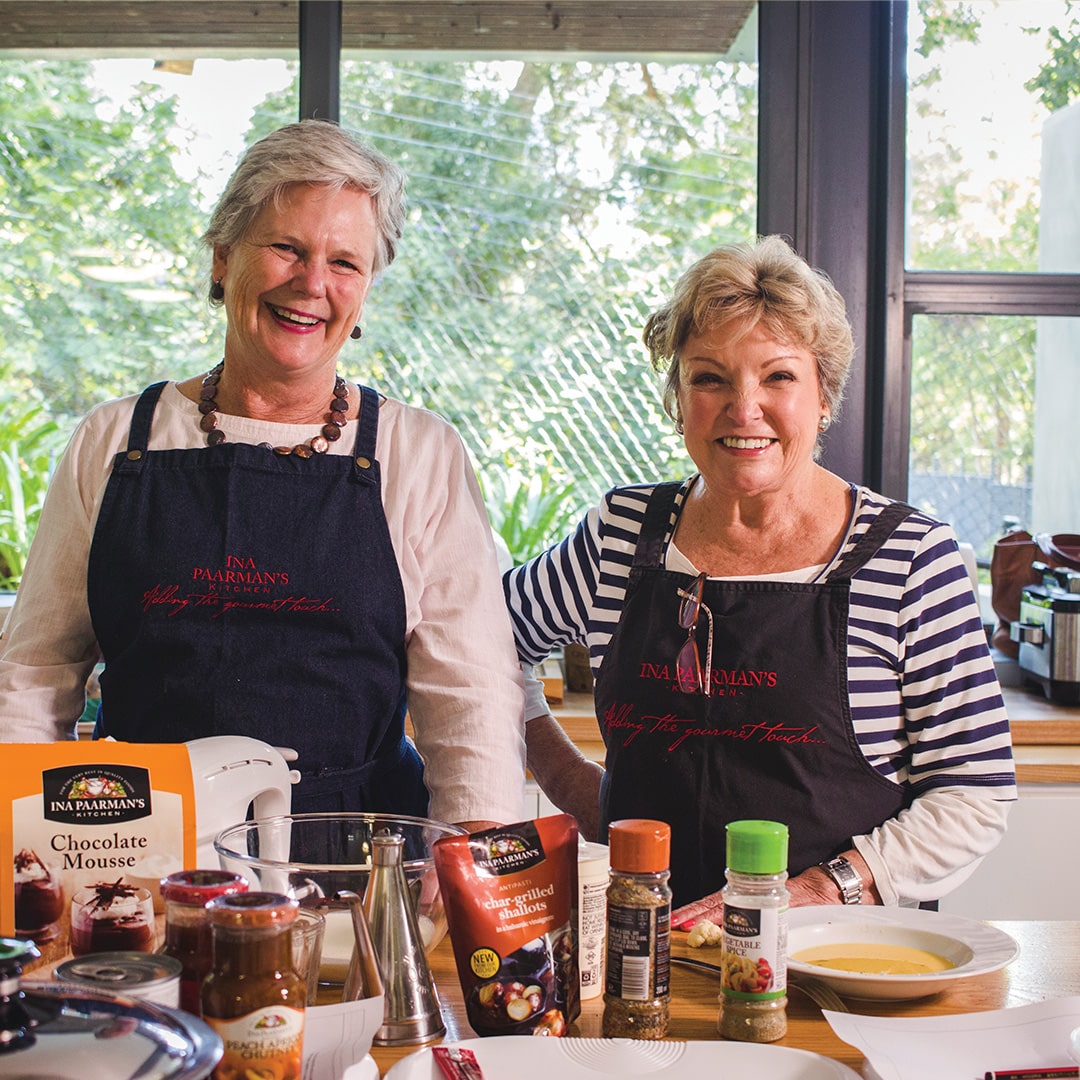
Much as she’s always done, Mrs Paarman continues to be deeply involved in product development — from the spark of an idea down to the final taste test before it is approved. She believes videos and the internet are powerful tools to teach cooking, so she spends much of her time creating new recipes, technique videos and replying to questions.
Nowadays, home cooks are much more concerned with time and budget constraints — and they’re a bit more experimental, too. “When I started, I was teaching housewives with all the time in the world, which is now not the case. The generosity of catering has changed now. Instead of having three meats on the table and six vegetables and two desserts, now you have one wonderful main course, perhaps two salads and either a starter or dessert. People are focused on quality meals that are achievable within the time limit available and at a price that is better than a restaurant,” she explains. “Cooking has also moved on from being the woman’s responsibility to one for the whole family. Palates have changed too — people love the South African classics but are a bit more adventurous. As I always say, South African food is the marching music of gastronomy – it’s not the choir. We love big flavours!”
Paarman’s parties over the years
With Christmas here again, remember this — even Ina Paarman couldn’t please everyone around the festive table. “When my mother-in-law was still alive, I used to slave away,” she groans. “But it was never good enough. My husband’s aunt was a nun and one year she came down from Zimbabwe. I did an orange duck and all sorts of lovely things. The woman sat down at the table and said: ‘Oh, by the way, I’m a vegetarian’. She didn’t even have the decency to tell me beforehand. I could have killed her!” she laughs.
Another year, she thought she’d be adventurous and serve prawns — “I wasn’t the expert prawn cooker I am today, though,” she adds. Mrs Paarman recalls how her father-in-law sat down at the table and demanded to know where the roast potatoes were before bellowing: “Are we only having these greasy bits of grizzle?”
In the ’80s, when her first cookbook came out, Christmas was all about the turkey and a leg of lamb. “Now you have to sell the farm to buy the leg of lamb,” she chuckles. Mrs Paarman observed that families will rather share the catering responsibility, asking people to contribute a course or a dish. “The thing about Christmas is that you have a burn-up on the day. But tomorrow, everyone’s hungry again. Plan for leftovers the next day, like a roast meat you can have with salad or put on sandwiches. The microwave is very helpful at Christmas, but most meat actually tastes better at room temperature” she advises.
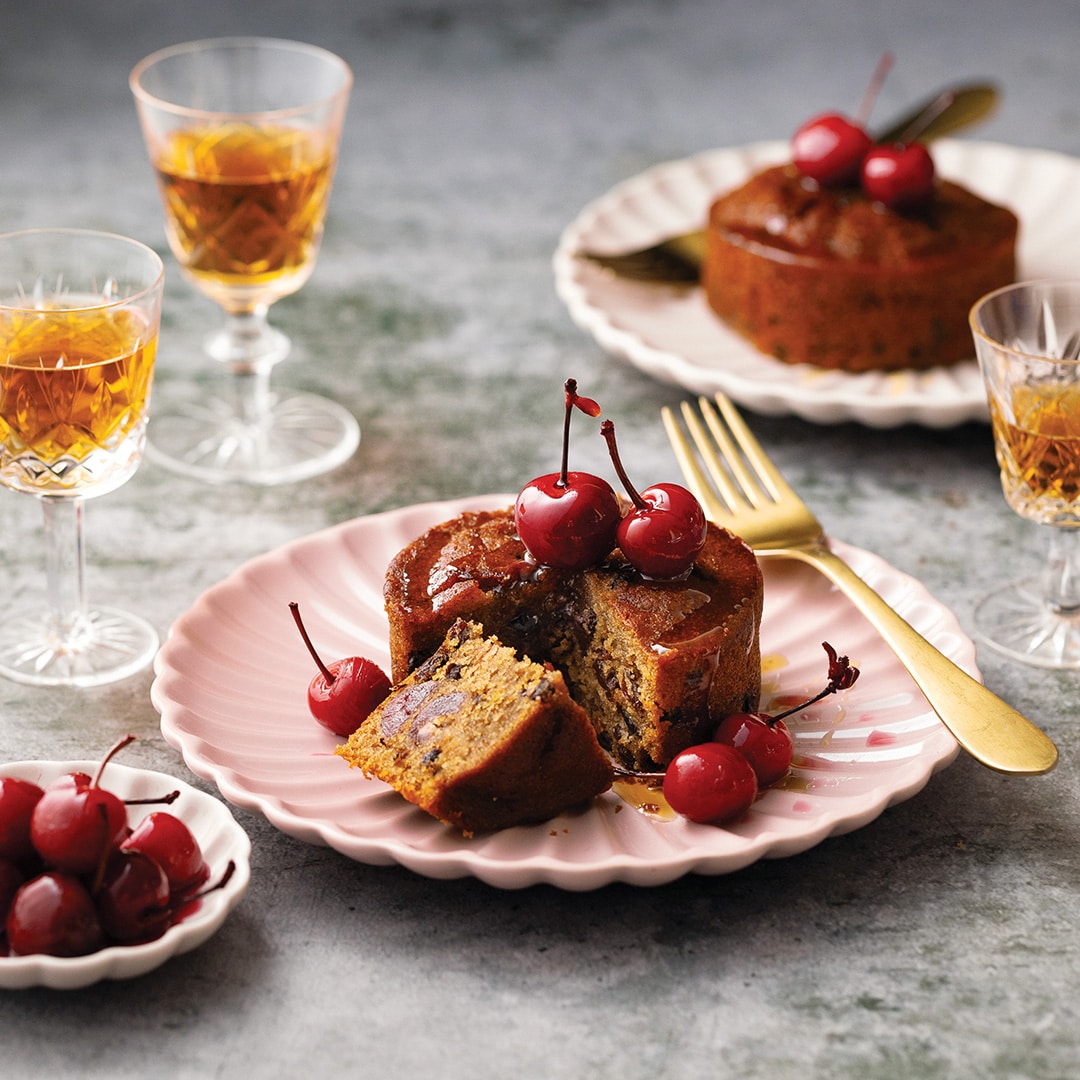
To her, Christmas cake is worth the effort. “Remember it improves with time, so it’s a good idea to get that out of the way. You can make a wonderful trifle with brandy or sherry-soaked Christmas cake, cream and custard,” she recommends. And what’s not worth it? “Those Christmas cookies you hang on the Christmas tree, which are fine if you want to keep the kids busy, but they go pap [soft] quickly,” she laughs. “They don’t last and they’re a fair amount of effort!”
When it comes to hosting, curb the ambition because then it becomes a “real chore”, says Mrs Paarman. “And line up the help: Some can open wine, set the table or arrange the flowers (keep the flowers fresh by adding a quarter cup of tonic water to the vase). The main thing is when people come into the kitchen and want to talk to you,” she chuckles. “You must give them all jobs, okay? That’ll keep them out of your hair.”
And what’s on the Christmas menu at her house this year? “Well, the hard truth is that I’ve had Christmas in the development kitchen ad nauseam,” she laughs. “Somehow, our Christmas at home is quite simple — but there will be a nice dessert. The boys will probably braai and since my husband passed away, the roast potatoes aren’t a necessity…”
Mrs Paarman’s meringue pointers
- She uses a handheld mixer because she likes the physical involvement, but she’ll admit that a stand mixer is quite a bit easier and quicker!
- It’s critical to add a bit of lemon juice at the beginning of the beating and do it just until it looks like spit, as she used to tell her school students. It must bubble just a little bit, then beat until it forms firm peaks. Only then do you slowly start adding sugar.
- Use the extra yolks to make a lemon curd, which you can serve over the meringue with seasonal fruit.
Food for thought
Mrs Paarman’s Christmas wish for 2025 is that there’s good weather, she receives gifts she “doesn’t have to dust”, that all the people she loves can be there and that there’s peace at the table.
When she thinks beyond the end of this year, after a year of working on it, she’s excited about the launch of a new product called “Flavour Bomb” — although the green onion seasoning is her favourite and is never too far out of reach. Mostly, she wishes for more time, especially to enjoy her garden more. But Mrs Paarman’s sense of purpose for the coming year couldn’t be stronger: “I’d like more people to be able to cook at home successfully and healthily, so that fast food outlets aren’t made to be the only place where people can feed their children. I want to help them get that confidence in the kitchen.”
Words: Christi Nortier
Photography: Supplied
Also read: Side dishes that might upstage your meaty mains for your festive feast