
Managing blood sugar is one thing — living well with diabetes is another. Christi Nortier spoke to Bridget McNulty, a leading advocate for South Africans with diabetes, about how she’s made it work for her.
As a writer and bookworm, Bridget McNulty read all she could about her Type 1 diabetes diagnosis. “Everything said I was now at greater risk of blindness, amputation, kidney failure, heart disease… and nowhere did it say you can live a perfectly normal, happy life with diabetes as long as you look after yourself. That’s specifically why we started Sweet Life in 2011,” shares Bridget McNulty, the founder of this online community for South Africans with diabetes.
Sweet Life is a non-profit organisation which aims to empower South Africans with diabetes by researching, creating and sharing quality information that is not only easy to understand, but also relevant to our citizen’s circumstances. It’s a largely online community — over 36 000 strong — that comes together on social media to provide mutual support and share their experiences. Each month there are online workshops, helpful diabetes tips and research initiatives. The website is a treasure trove of information and advice, all reviewed by Sweet Life’s network of top diabetes experts. From meal plans to mental health, everything the organisation provides is meant to encourage discussion. Every online article ends with the questions: “What do you think? What has been your experience? Let’s figure this out together.”
“Our goal is really to empower South Africans with diabetes to live healthy, happy lives, and we do that through education and community. There’s so much wisdom in the community that we can share,” Bridget explains. Drawing on decades of personal experience and this vast network, she shares key insights for living with diabetes which are relevant to anyone seeking a richer, more balanced relationship with food – no special “diabetes diet” in sight.
Decoding diabetes burnout & food
“When you have diabetes, there is a natural obsession that comes with food because you have to count it if you inject insulin. You count your carbs and then have to figure out how much insulin to inject after every meal, snack, bit of dairy or piece of fruit,” she says.
“But what’s tricky is that you don’t really know exactly what it’s going to do to your blood sugar levels. Ideally, if we weren’t emotional beings, we’d just look at those results as data points. You beat yourself up for the high and low scores — the monitor is giving you visual feedback in real time that you’ve ‘messed up’ by eating something. That kind of guilt is hard for anyone, now it’s compounded by a number. It becomes this really exhausting cycle because then you don’t want to look at the numbers because ignorance is bliss. This is one of the factors that can lead to diabetes burnout.”
“If you have Type 2, there is a constant play between what you are perceived to be allowed to eat and not. The wrong question to ask a person with diabetes is `Should you be eating that?’. It will infuriate them because by the time someone is choosing to eat something, best believe they have thought it through. They’ve analysed it and considered how they’ll feel later, if they have enough insulin and if it’s worth it for them.”
Part external pressure, part internal struggle, the realisation that this is a lifelong condition also adds to the load, says Bridget.
“So you have to find a way to incorporate the foods that are worth it and then actively work on the guilt side of things. Remember that you’re human. It’s a chronic condition. You can’t eat perfectly all the time and no one is getting ideal numbers constantly. Don’t be afraid to tell people you can eat something, that you’ve got it worked out and that they should back off. It takes time and practice.”
Moderation is key
“My mom always said: ‘Everything in moderation’. She’s tried every diet there is, so she was always clear with me that dieting doesn’t work and that moderation is the way to go,” Bridget shares. “So when I was diagnosed with Type 1 diabetes at 25 years old, I was already eating quite healthy — although I eat a lot less sugar now than I did back then,” she chuckles. A big part of adjusting to life with diabetes was retraining her palate, cutting down the portion of sugar slowly over time by half a teaspoon or fewer blocks of chocolate.
But what does moderation look like? That absolutely depends on the person, says Bridget. What works for her might not work for the next person – hell, it might not even work for her the next day! “Notoriously, you can do exactly the same thing two days in a row and eat exactly the same thing and take the same amount of insulin and do the same exercise and it doesn’t make a difference – your blood sugar will be different,” she explains.
Is it jab-worthy?
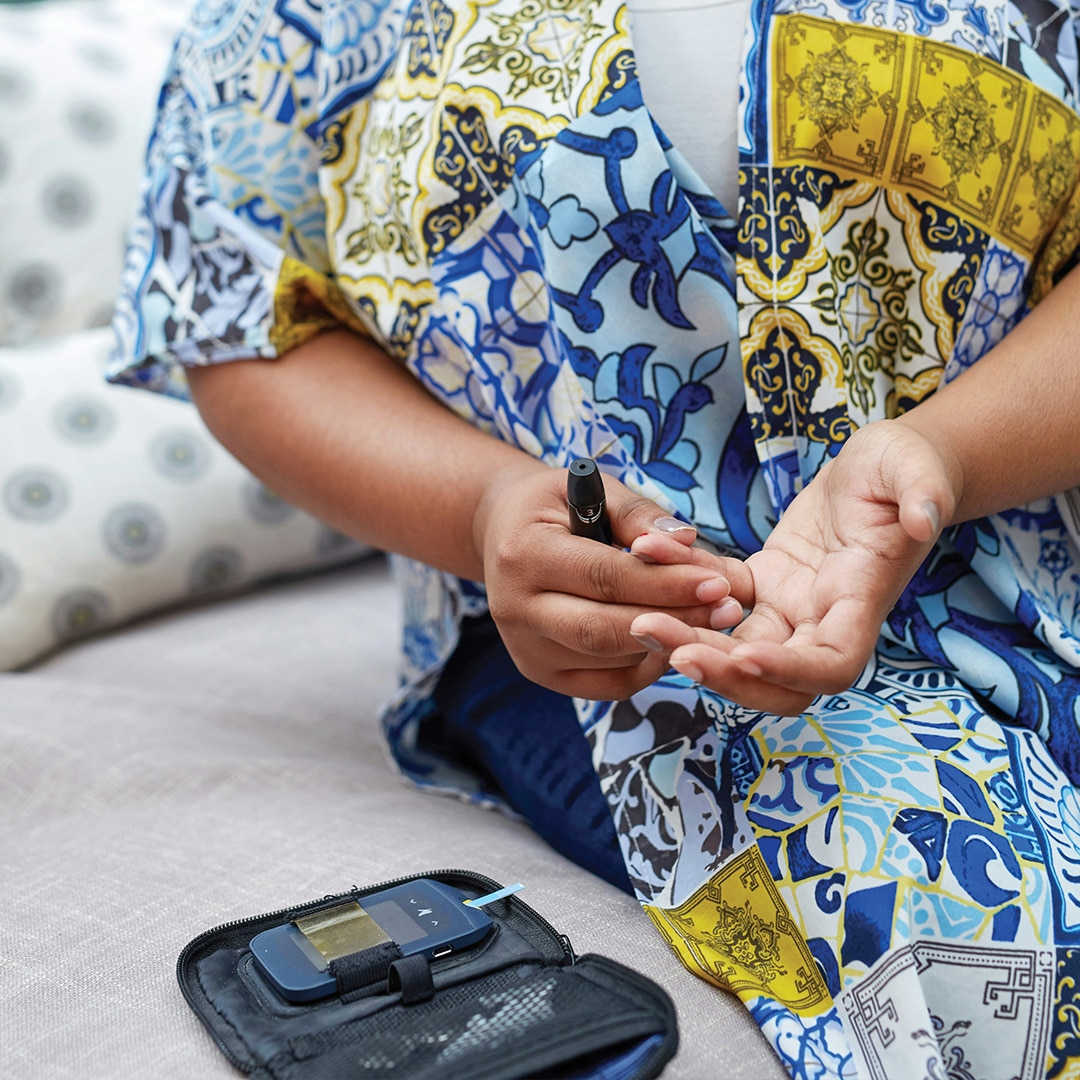
This simple question has left an impression on Bridget’s friends, whether they’re living with diabetes or not. “Having diabetes, you have to decide if something is worth an injection because a lot of the time we just eat things because they’re there. I’ve been at an event where the dessert has come past and I’ll ask people if it’s good enough to be worth an injection — they’ll say not really, but keep on eating it. I’m thinking: then why eat it? That’s my approach, and it means I end up eating a lot of great food,” she says.
For those with Type 2 diabetes, the equivalent question could be “Is it worth it?” because if your blood sugar goes high, it can leave you feeling grumpy and tired. Sometimes it’s worth it, sometimes not, but it’s a question we should all be asking so we’re not eating mediocre food, she says.
Making decisions to feel well
“My primary objective with diabetes is for it to take up as little space as possible. I want it to not be loud,” she says. “My focus is quality of life. My approach to a lot of the food stuff around diabetes is that I do it all because I feel better. I think often doctors aren’t trained to communicate that to us. The decisions we’re making are because we will have more energy, our heads will be clearer and we will feel better able to tackle the world. And that’s worth changing the way you eat if that’s how you’re going to feel. Feeling well is so important.”
Words: Christi Nortier
Photography: Sweet life
Also read: Diabetic-friendly recipes that are big on flavour