
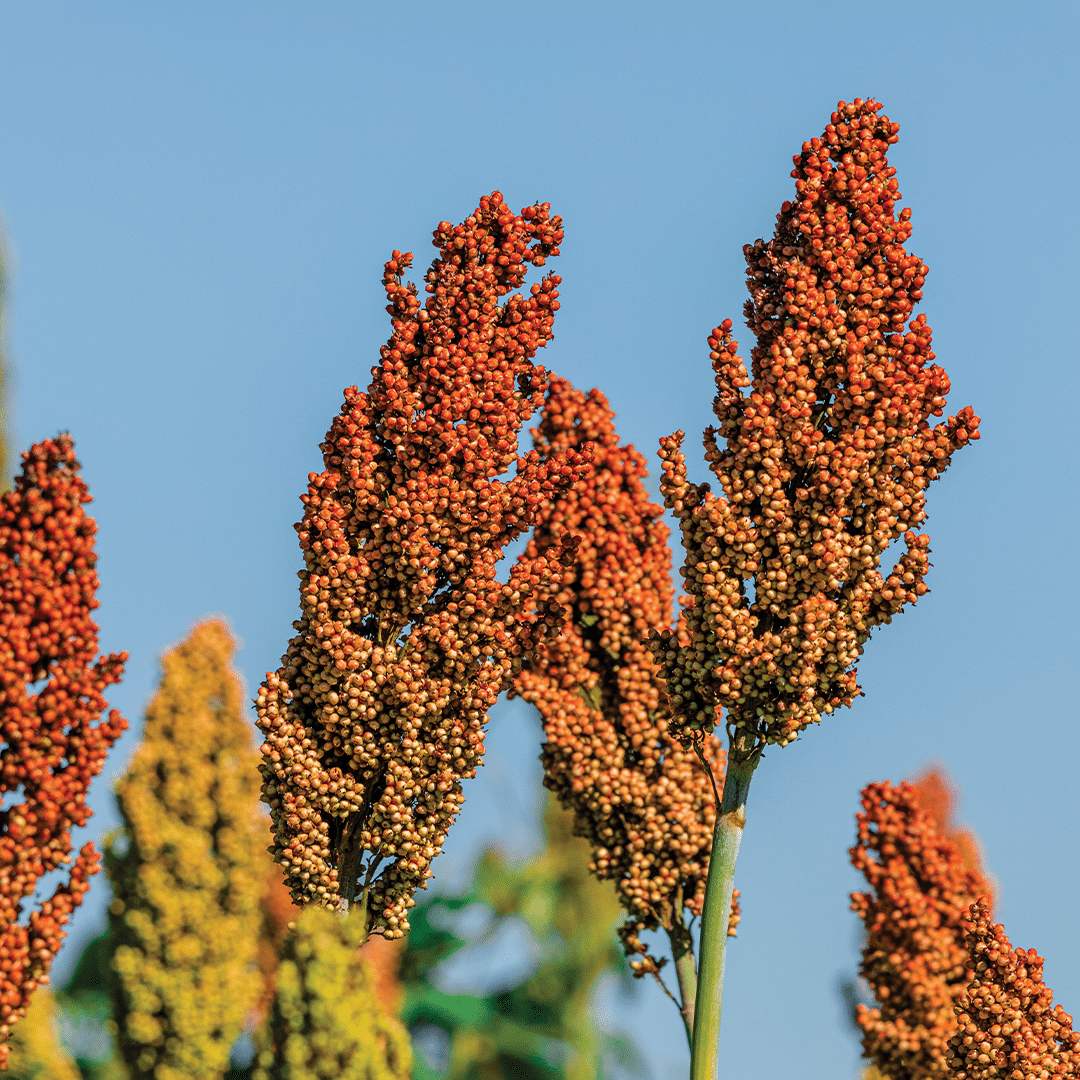
Zandile Finxa, the award-winning consumer scientist and chef nurturing South Africa’s renewed appreciation for sorghum, chats to Christi Nortier about their grandmother’s cooking, the ‘Sorghum Agenda’ and new ways to play with this ancient ingredient.
When we reach out to shake hands with Zandile Finxa, you can’t help but notice the delicate tattoo of a sorghum stalk gracing the top of their hand and thumb. It immediately brings their beloved indigenous grain into the conversation – which is exactly what they want.
This consumer scientist turned chef, recipe and product developer, writer and activist has used many means to highlight and push this grain to the front of the national conversation about sustainable, ethical future foods – from social media series to fine-dining events. It is versatile in the kitchen, gluten-free, nutritious, drought-resistant and improves soil health. So why aren’t more of us eating it? That’s where Zandile’s
The World In a Grain of Sorghum
Zandile’s story can be told through sorghum – or rather, is it the other way around? As a kid, a holiday highlight was sitting on the stoep guzzling a sorghum drink with their cousins so they could resume playing. At family gatherings, funerals and weddings, sorghum was transformed into ting (fermented porridge) and mqombothi (traditional beer) to be shared with anyone who came to support the family. It was also their grandmother’s tool to “make a lot happen with very little”.
A retired domestic worker, Zandile’s grandmother Matshepo Ntja had a “small pocket” and the ability to stretch food to the extremes at home in Sebokeng. “I think back on the meals and I’m amazed, because we had nothing in the house,” Zandile shares, shaking their head with a chuckle. “Vaal is a maize-forward place, but my grandmother made me love sorghum. When she was diagnosed with diabetes, she moved away from maize and back to sorghum, back to her roots. She would make it for me when I was sad, so I associate it with comfort. It was one of my first meals as a child, and it was her last meal before she passed.”
At university, Zandile kept a small jar of ting in their dormitory room as a comfort when they missed their grandmother. They sat with the memory of their last argument: their grandmother livid that they changed from chemical engineering to food science. “I realised that she was disappointed with my choice because she’d worked her whole life so | didn’t have to cook for a living, like she had to do. She didn’t even let me cook as a kid. I had to explain to her that it won’t be like that – I’m still a scientist. She came round eventually and even bought me my first toolkit,” they share.
After the first term’s exams ended, they headed home with excitement to show off new cooking techniques and cook up a storm for their gran. But Zandile returned home to grief: their grandmother had passed. They were too late. “She never got to experience my food. I became insistent on honouring food that made me think of her,” they share. “In that way, she can exist even beyond me.”
Going Against the Grain
Zandile turned thought into action immediately. At university, they tussled with a curriculum that only embraced indigenous African ingredients during Africa Month or Heritage Day and lecturers who had limited knowledge of them. Zandile used every project to pus! hese ingredients to th fore, especially sorghum.
They developed a line of sorghum cookies as a solution for gluten intolerance, something they experienced themselves, but was at first told it was “too niche”. “How can food be ‘niche’ if it’s something 60% of people in South Africa grew up with?” they questioned. “Neophobia is the fear of anything new.
This applies to food in that you can be biased towards the food you grew up with and see only that as credible. I wanted to change perceptions, but knowing this I needed to make it welcoming too.”
The cookies went through a taste test each week and slowly but surely, perception began to change – people were enjoying them. Zandile took to X (formerly Twitter), posting polls to gauge public awareness and interest in sorghum. They started sharing more about the grain – that it’s drought-and heat-resistant, naturally gluten-free, contains protein and is filled with minerals and vitamins. “I took everyone on the journey with me. People started to see it as more than Maltabella. It created a community and challenged me to think beyond the projects,” they reflect. People asked more questions, which led to more and more research. Meanwhile, the sorghum cookies won an award for most creative and innovative recipe development.
Since then, Zandile has developed recipes for meals they’ve hosted expressly to introduce people to indigenous ingredients, chief amongst them sorghum, in a way that’s accessible yet exciting. This experience fed into their academic research papers and continues to do so.
A silver lining of their Covid-19 lockdown experience was the opportunity to post about sorghum and indigenous ingredients every day – food that made them, and surely others, happy during a terrifying time. The followers, awards, collabs and media attention for the Sorghum Agenda flooded in. People spotted Zandile in the street and shouted “Sorghum Agenda!” as they passed by. They had the term trademarked so that like the growers of sorghum, they should also benefit long-term from this project and that it will forever stay connected to their grandmother. It is no longer just an agenda – it is a national movement.
:
Be Part of the Change
If Zandile’s won you over too, this is what they want you to do next: incorporate sorghum into a meal once a week. That’s it. That one action ticks off many items on the Agenda. It supports a sorghum farmer, ploughing value right back into the community that has spent centuries as the custodians of this crop. It promotes a highly nutritious food that will weather the extreme heat and drought of the climate crisis better than many others. It will motivate retailers to stock it more widely.
Another thing is to tell a friend about it. “Part of the Agenda is to shift the perception that this is the food of black people. I’m saying no, that’s what they had to eat when there wasn’t much and they refined that part of cuisine, so give that credit, but let’s make sorghum something everyone can engage with. Don’t exclude people and make the food ‘other”,” they explain. This will be a major theme in a book Zandile is working on, combining their scientific research with story and recipes.
Of course, the book will be in honour of their grandmother. “No one will forget her name,” they say. “She may have only had Grade 2, but she is massive.”
Play With Your Food
Sorghum is incredibly versatile, starting with its many preparations and corresponding textures.
[See just how versatile sorghum is].
As a whole grain, it tastes slightly nutty with the bite of samp. Crushed into coarse sorghum, it takes on the texture of mielie rice but with a more gelatinous layer in between. This version benefits from fermenting or soaking to make it easier for the body to digest and absorb its goodness, Zandile advises. It’s ideal for making ting and tossing through salads.
After soaking for 24 hours, the sorghum starts to ferment and create gut-loving bacteria, much like a prebiotic. The cooked fermented sorghum will taste like the fermented tea flavour of kombucha. Zandile recommends starting with the soaked version to understand what it tastes like, then progressing to the fermented one.
The more finely crushed sorghum, slightly coarser than Maltabella’s flour-like texture, is ideal for a softer porridge. It will always be a bit gritty, like maize meal or quinoa, and can also be used as a flour in cakes or cookies, either alone or in combination with other flours depending on the texture. See just how versatile the sorghum is you’re after. Zandile has made amagwinya, nachos and ice cream with sorghum but their wildest experiment so far has been brewing tea from the sorghum stalks and leaves.
“Why not have a bit of protein with your tea too?” they laugh.
Through all the experiments, their favourite way to enjoy the grain is still cookies. Sorghum can be in your porridge or smoothie for breakfast, the base of your lunch salad or the flour in the bread alongside soup for dinner. Puffed sorghum is the perfect snack.
Zandile recommends pairing fermented sorghum with a rich umami stew, with mushrooms or a salty cheese. In a salad, sharp vinaigrettes or pestos work wonders on it. Going sweet, sorghum is good friends with chocolate and ginger.
Their top tip: Cooked sorghum lasts about 3-5 days in the fridge and freezes well-which could even lower its GI.
Get Curious
For Zandile, there’s much still to do to take the movement to even greater heights.
:
Alongside the book, they are eager to do a Ted Talk on the Sorghum Agenda. Their mission now goes beyond sorghum to include all indigenous foods, and giving people the permission to act on their curiosity and try something new – and respond with the empathy needed to understand it.
They hope too that the movement can give people “food esteem”, to have confidence in their own food and to own the differences. “This cuisine was here before I was born, it will be here forever afterwards and it’s found its place. I’m just the conduit for that. It’s about changing minds, one kitchen at a time,” they share.
It’s clear that there’s a new kitchen table being built -and Zandile’s saved you a seat.
Words: Christi Nortier
Photographs: Supplied