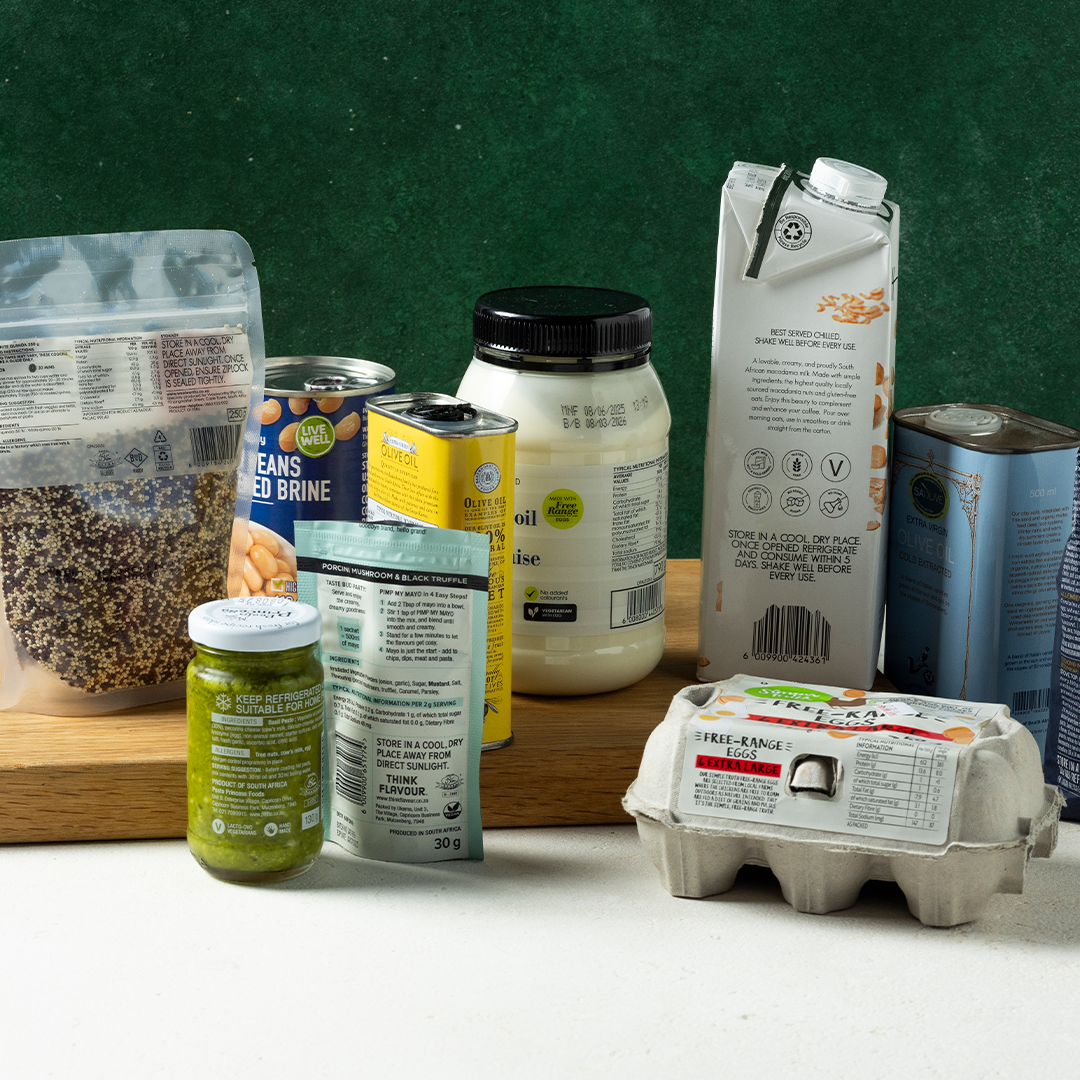
Pretty packaging and healthy-sounding terms should inform, not trick you. Know the facts so you take back control on making the best choice for you.
Treatment & feeding of animals
- Organic: A farming system that promotes sustainability, soil quality and biodiversity. The goal is to help the soil, the animals and the people. Organic farmed animals are automatically free-range. If a label says “made using organic ingredients” it needs to contain 70% organic ingredients, while labels that call out organic or 100% organic, must contain at least 95% organic ingredients.
- Free range: Animals must have the freedom to roam, with access to sunlight and green vegetation. But, not all free-range produce is considered organic. Unfortunately some people bend rules, so be sure to look for the certification body on the label that guarantees the product passed certification.
- Grain-fed: Animals that aremainly fedcorn and soy, with some grass and hay. This results in fattier, more marbled meat that is tender in texture.
- Grass-fed: Grass- and hay-fed animals. This results in leaner, firmer meat with higher nutrient profile. Remember, this only highlights the animal’s feed and not any other aspects of animal welfare.
Oh so natural
A product can be labelled “natural” if it has no added colourants, flavourings or additives. In South Africa, there are strict rules around these types of labels. If the product has clear ingredients that are minimally processed or in their natural form, as well as without the above-mentioned additions, they can be labelled as natural.
Scientific names are bad, right?
Some ingredient lists contain scary sounding ingredients. Some are just as scary as they sound, but others are masking harmless necessities such as vitamins or minerals that contribute to the body.
- Sodium chloride = table salt.
- Ascorbic acid = vitamin C.
- Acetic acid = vinegar.
- Pyridoxine = Vitamin B6.
- Natamycin = an additive used to prevent mould growth in cheese, yoghurts, fermented products and baked goods.
Order, please!
According to South African law, ingredient lists must be ordered from what makes up the highest percentage to the lowest. So if sugar is listed first, it means it makes up the bulk of the product.
Good news
South Africa passed a bill in 2023 to crack down on food labelling. This prohibits the use of terms such as “smart”, “intelligent”, “nutraceutical”, “wholesome” and “nutritious”, which carry no weight as there was no law governing the use of these words.
On a cocoa mission
Tony’s Chocolonely is a brand that sets out to tell the bitter truth about chocolate:
- Millions of West African cocoa farmers live in poverty because they are systematically underpaid.
- 1.65 million children work illegally on cocoa farms in West Africa.
- A third of West African forests are lost to deforestation caused by global chocolate demand.
Tony’s Chocolonely makes unequally divided chocolate bars to remind you of the inequality in the chocolate industry. More than a marketing stunt, the delicious chocolate is making meaningful change by:
- Purchasing cocoa beans that enable direct and equitable trade.
- Collaborating with cocoa partner cooperatives to professionalise the cocoa industry, implement sustainable practices and empower farmers.
- Making long-term commitments to farmers topurchasecocoa beans at a higher price, so they can earn a living wage and create a sustainable farming system.
Grow and get ’em!
Fresh Life Produce (FLP) is a local company that uses innovative vertical farming practices, which allow communities to grow their own food and achieve self-sufficiency.
Founder Louis-Gillis Janse van Rensburg invented the African Grower: a vegetable garden in a box that allows you to grow up to 24 plants vertically. You simply need to take a 2L water bottle a day to water your plants. The hanging hydroponic system is “the perfect solution for turning wastelands into productive, off-grid farms, creating jobs and supporting mining redevelopment efforts.”
Quick facts about the African Grower:
- No electricity or running water necessary.
- Uses 1/10 of the water and 1/6 of the space necessary for farming on land.
- Hanging design creates a natural pest barrier.
- Minimal fertilisation isrequired.
- Manufactured from recycled plastic.
Recipe & styling: Liezl Vermeulen
Photography: Austin Taylor, Supplied